
How CRM Software Can Boost Customer Satisfaction- The Service Center’s Secret Weapon
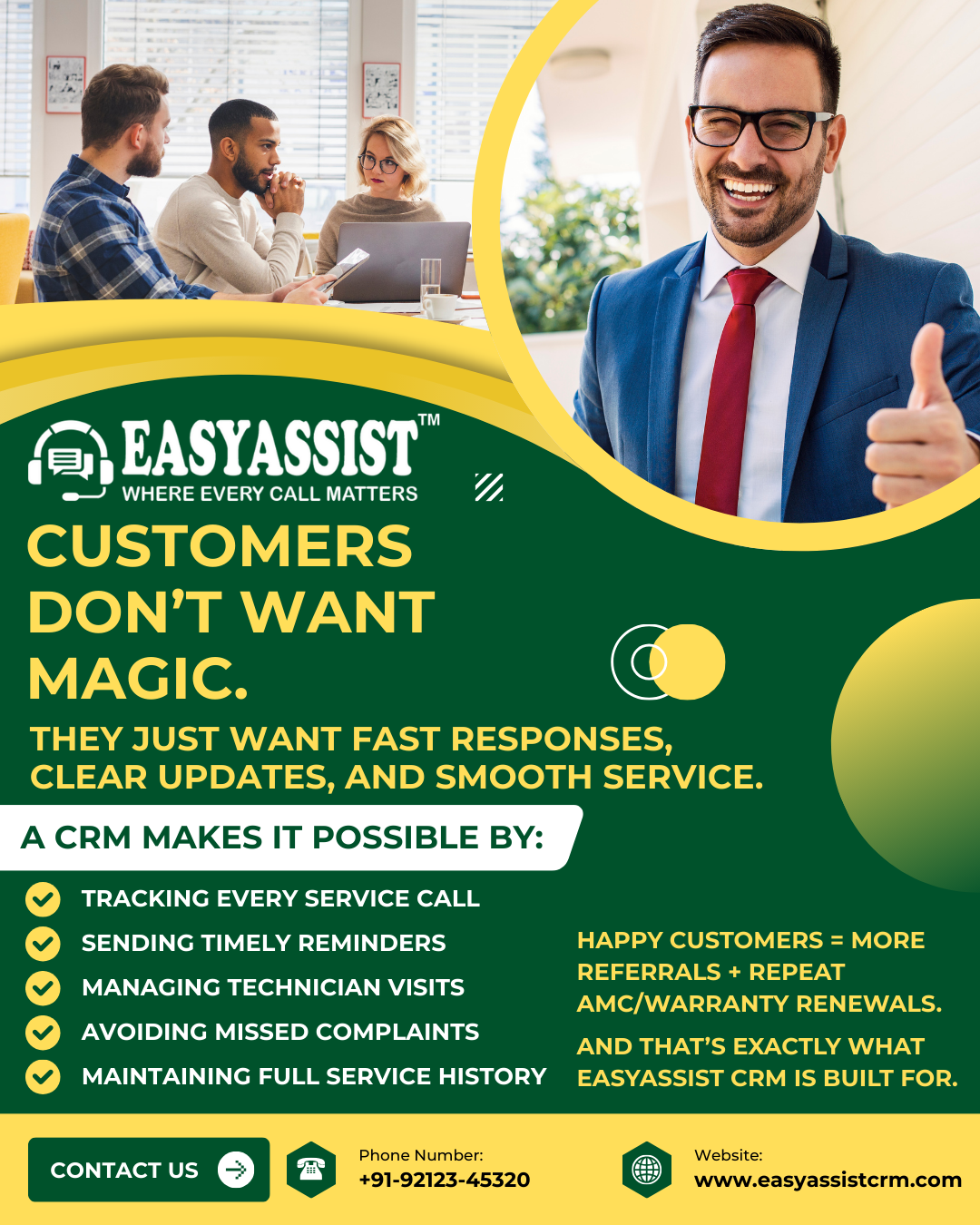
In the competitive world of manufacturing, home appliances, and dedicated service centers, customer satisfaction (CSAT) is the gold standard. It is the metric that separates thriving businesses from those struggling to keep the lights on. A high CSAT score translates directly into customer retention- increased advocacy- and, ultimately, more revenues for the organization. Conversely, low CSAT signals operational failures- frustrating the very customers you need for survival. The question is no longer if you need to improve satisfaction- but how. The answer lies in transforming your after-sales support from a chaotic cost center into a systematic, professional, and responsive experience. This is the precise function of a specialized CRM solution like EasyAssist- a complete business management solution built to simplify issue resolution for small to medium-sized businesses. CRM software is the service center’s secret weapon- boosting customer satisfaction by eliminating the root causes of frustration and building lasting trust in the brand. A major source of customer dissatisfaction is the friction encountered at the very start of the service journey- when the customer attempts to log a complaint. Are your Customer Complaints getting lost? This instantly tells the customer that their problem is not a priority. Integrated Call Management: EasyAssist offers an integrated call management system to handle customer queries efficiently. Every incoming service request is instantly logged and tracked. Systematic Service Call Registration: The CRM transforms a chaotic phone queue into an organized flow via Service Call Registration. This ensures that once the customer calls, their issue becomes a traceable Ongoing Task, guaranteeing it is allocated and actioned. Support Ticket Management: The platform’s Support Ticket Management organizes and tracks customer issues for efficient resolution - providing a structure that assures the customer their problem will be solved. By implementing this, you prevent complaints from vanishing- a key driver of frustration. For a service customer, the on-site technician is the physical representation of your brand's commitment. A clumsy, ill-prepared, or delayed technician destroys satisfaction faster than almost anything else. Are you clueless about the Activities of your Technicians/Field Staff? If so, your customers notice. Technician Visit Management: This module allows you to schedule and track technician visits to customer sites. Proper scheduling means less waiting time for the customer- a massive satisfaction boost. Ensuring Task Completion and Feedback: During and after the visit, the CRM ensures task completion and helps gather feedback, which is captured via the Technician Visit Feedback function. By tracking and acting on this feedback, you show customers you value their opinion and are committed to continuous service quality. Inventory Alignment: By integrating Inventory Management, the system ensures the technician knows exactly which Spare Parts are available and needed for the job- eliminating the need for frustrating second visits due to missing components. The result is a professional, efficient experience that causes customers to speak well about the organization and its products. The long-term health of the customer-brand relationship is cemented through reliability and foresight- especially concerning product lifecycles and service contracts. Delayed Warranty/AMC Renewals & Activities is a major pain point that signals operational neglect. Warranty/AMC Registration and Management: The CRM provides dedicated features to register and manage product warranties and Annual Maintenance Contracts (AMCs). Timely Renewal: By automatically tracking contract expiration dates, the system ensures renewals and activities are completed on time. This proactive service prevents service gaps for the customer- reinforces their initial investment- and assures them that the organization is looking out for their long-term interests. This proactive approach contributes to the fact that after-sales service plays a pivotal role in strengthening the bond between the organization and customers. In today's digital world, convenience is a key component of satisfaction. Customers expect quick, hassle-free communication and payment options. WhatsApp Automation: The WhatsApp Management module allows the service center to Automate customer interactions and business processes via WhatsApp. Meeting the customer on their preferred communication channel significantly lowers effort and boosts perceived service quality. Integrated Payments: Including a Payment Gateway simplifies the final transactional step. Easy, secure payment options remove the potential friction that often follows a successful service visit. These integrated features contribute to an Effortless & Systematic Interface for All Users, ensuring the experience is positive from start to finish. For a service center, the implementation of a specialized CRM is directly linked to resolving the four key questions that signal customer dissatisfaction. When you can confidently say you are not struggling with customer satisfaction, not losing complaints, not delaying renewals, and not clueless about field staff, you have mastered the art of service.1. Eliminating the Friction of Initial Contact and Tracking
How CRM Solves This:
2. Building Professionalism Through Field Service Excellence
How CRM Solves This:
3. Fostering Trust Through Proactive Contract Management
How CRM Solves This:
4. Simplifying Communication and Payments
How CRM Solves This:
Conclusion: The Retention and Revenue Payoff